Introduction
In the streaming era, releasing music is no longer limited to major record labels. Today, any independent artist can release songs on platforms such as Spotify, Apple Music, YouTube Music, or Amazon Music thanks to music distributors.
But what exactly is a music distributor? How does it work? What services does it provide? And how do you choose the right one?
This guide explains everything you need to know, from basic concepts to technical details and business models currently used in the music industry.
Table of Contents
- What Is a Music Distributor?
- How Does a Music Distributor Work?
- What Services Does a Music Distributor Offer?
- Music Distributor vs Record Label vs Aggregator.
- How Do Music Distributors Make Money?
- Advantages and Disadvantages.
- How to Choose a Music Distributor.
- The Role of Music Distributors in the Age of Artificial Intelligence.
- Frequently Asked Questions.
- Summary.
What Is a Music Distributor?
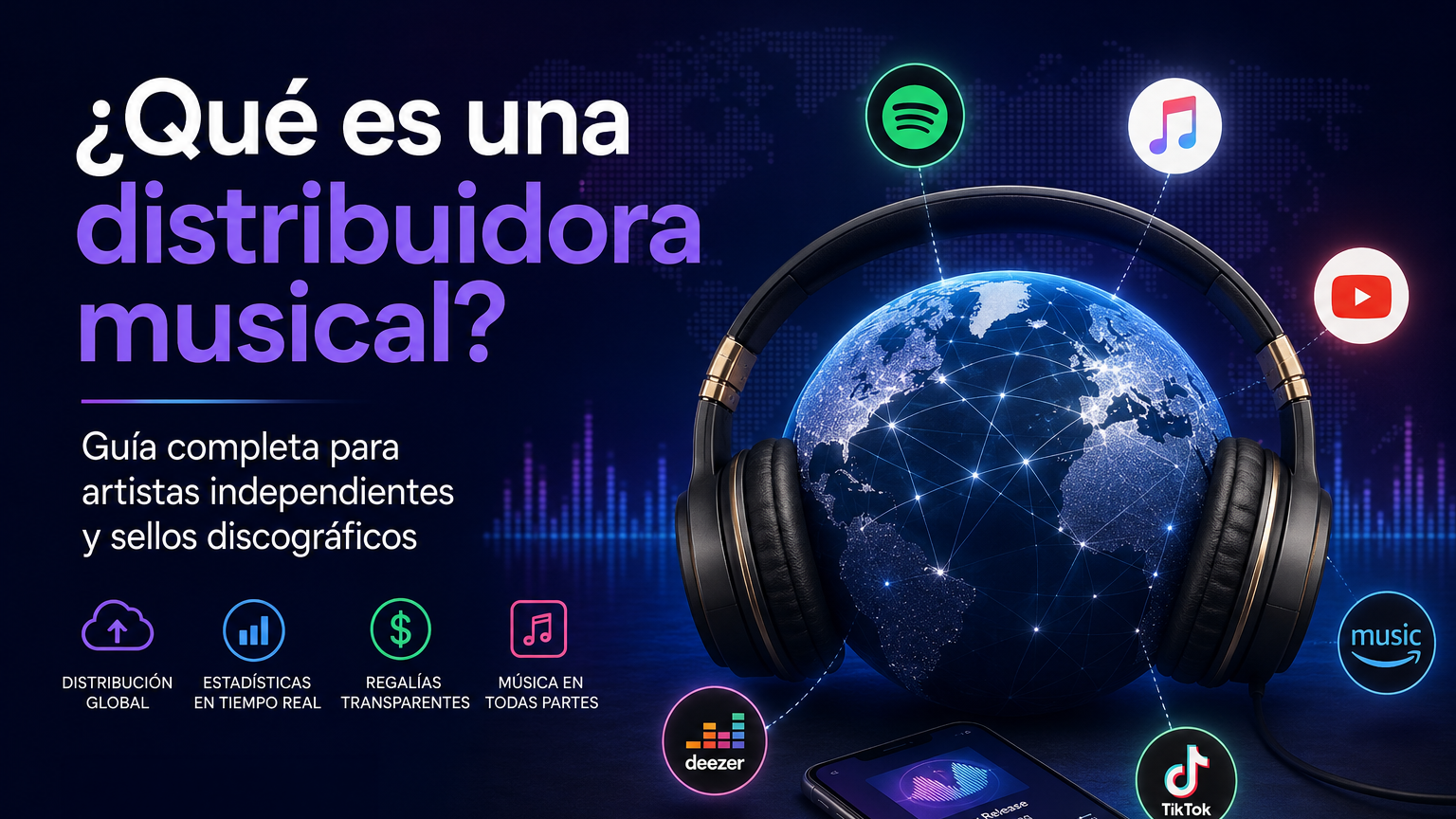
A music distributor is a company or technology platform responsible for delivering and managing music from artists and record labels across digital services such as Spotify, Apple Music, Deezer, Amazon Music, TikTok, YouTube Music, and other streaming platforms.
In simple terms:
A music distributor acts as the intermediary between music creators and the digital platforms where people listen to and consume music.
Its main role is to ensure that:
- Music reaches hundreds of platforms.
- Metadata is properly organized.
- Royalties are collected and distributed.
- Artists can efficiently manage their releases.
How Does a Music Distributor Work?
The process usually follows these steps:
| Step | Description |
|---|---|
| 1 | The artist uploads a song or album. |
| 2 | Cover art, credits, and metadata are added. |
| 3 | The distributor reviews the content. |
| 4 | The music is delivered to digital platforms. |
| 5 | The release becomes available to listeners. |
| 6 | The distributor collects royalties. |
| 7 | The artist receives earnings according to the agreement. |
Practical Example
An independent artist produces a song and wants to release it worldwide.
Without a distributor:
- They cannot directly upload music to most streaming platforms.
- They would have to negotiate separately with each service, which is impractical for most artists.
With a distributor:
- The artist uploads music only once.
- The release is automatically delivered to dozens or hundreds of platforms.
- They can monitor statistics and earnings from a centralized dashboard.
What Services Does a Music Distributor Offer?
Although digital distribution is their primary function, many distributors offer additional services.
1. Distribution to Streaming Platforms
Music distributors can deliver music to:
- Spotify
- Apple Music
- YouTube Music
- Amazon Music
- Deezer
- TikTok
- Tidal
- Pandora
- Boomplay
- And many others.
2. Royalty Collection
Distributors collect revenue generated from:
- Streaming plays.
- Digital downloads.
- Social media usage.
- Video monetization.
- Licensing and synchronization deals.
3. Metadata Management
Metadata includes information such as:
- Artist name.
- Songwriters.
- Producers.
- Musical genre.
- Release date.
- ISRC code.
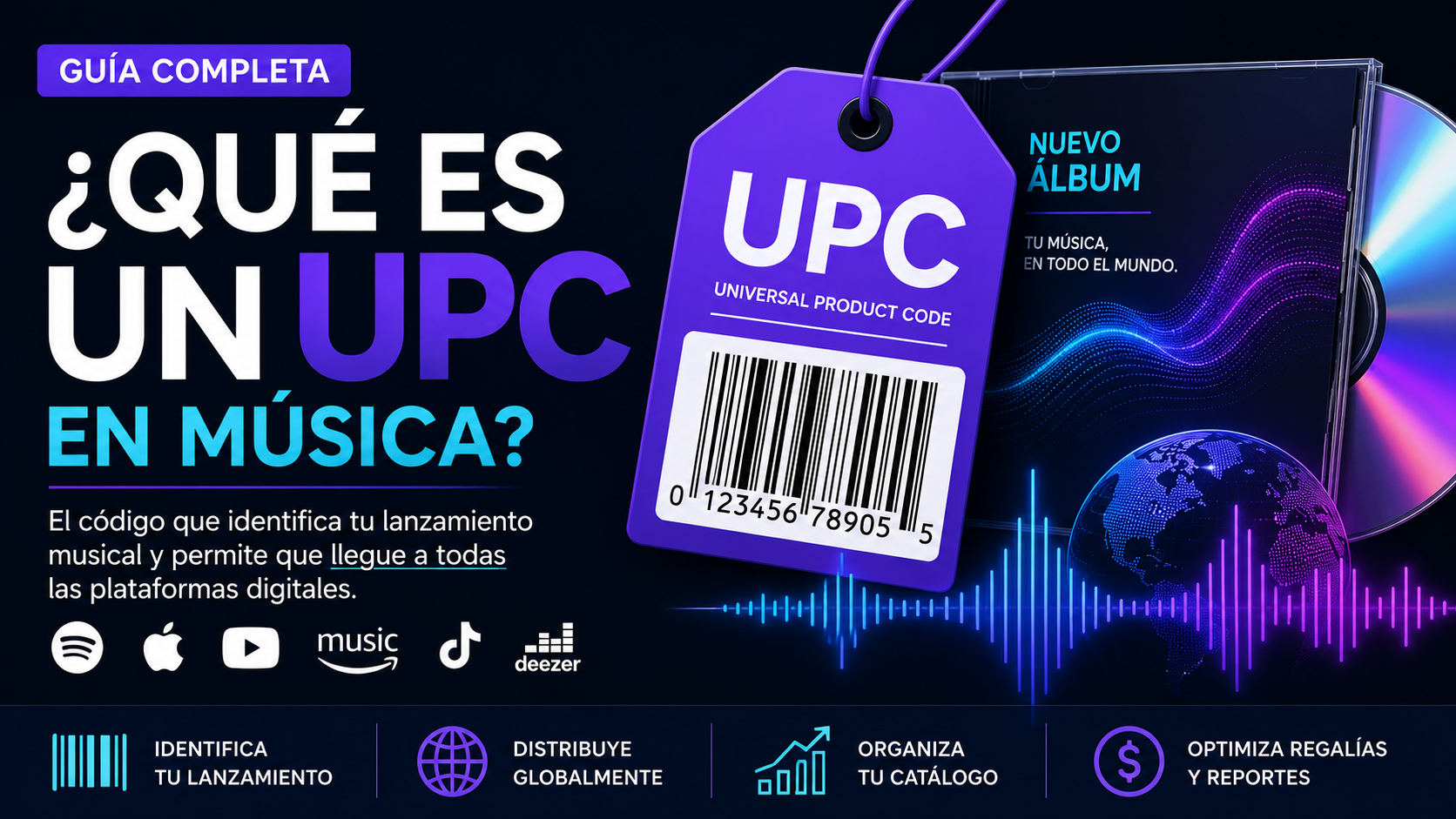
- UPC code.
- Contributor credits.
Proper metadata management is essential because it affects:
- Royalty recognition.
- Accurate identification of the work.
- Visibility on platforms and search engines.
4. Analytics and Reporting
Many distributors provide:
- Streaming statistics.
- Audience by country.
- Revenue evolution.
- Song performance reports.
- Demographic insights.
This allows artists and labels to make data-driven decisions and optimize release strategies.
5. Additional Monetization Services
Some distributors also offer:
- Publishing administration.
- YouTube Content ID.
- Neighboring rights management.
- Film and TV licensing.
- International royalty collection.
Music Distributor vs Record Label vs Aggregator
These terms are often confused, but they serve different purposes.
| Feature | Music Distributor | Record Label | Aggregator |
|---|---|---|---|
| Distributes music to streaming platforms | Yes | Yes | Yes |
| Signs artists | Usually no | Yes | No |
| Invests in marketing | Sometimes | Yes | No |
| Finances recordings | Usually no | Yes | No |
| Manages artist careers | No | Yes | No |
| Provides technology tools | Yes | Varies | Yes |
Music Distributor
Focuses on digital distribution and administration.
Record Label
Invests in artists and actively participates in career development.
Aggregator
A basic technology solution designed primarily to deliver music to platforms, usually with limited additional services.
How Do Music Distributors Make Money?
There are several business models.
1. Commission on Royalties
The distributor retains a percentage of the artist's earnings.
Example:
- The artist generates USD 1,000.
- The distributor charges a 15% commission.
- The artist receives USD 850.
2. Annual Subscription
The artist pays a fixed fee to distribute music.
Advantages:
- Predictable costs.
- The artist may keep 100% of royalties.
Disadvantages:
- The subscription may need to remain active to keep certain services available.
3. Hybrid Model
Combines:
- Subscription fees.
- Royalty commissions.
- Optional premium services.
Advantages of Using a Music Distributor
Global Reach
Music becomes available in international markets from day one.
Access to Multiple Platforms
A single release can be distributed simultaneously to dozens of services.
Centralized Management
Artists can manage:
- Music.
- Statistics.
- Royalties.
- Rights.
- Reports.
All from one platform.
Scalability
Artists and labels can release:
- Singles.
- EPs.
- Albums.
- Entire catalogs.
Without negotiating separately with each platform.
Continue Learning
The digital music industry is constantly evolving.
Exploring topics such as royalties, ISRC codes, publishing, YouTube monetization, and release strategies can help artists and labels make better decisions and take full advantage of the opportunities offered by today's music ecosystem.
Specialized platforms such as UXEM Entertainment Group are part of this new generation of solutions that aim to simplify music distribution and monetization for artists and record labels worldwide through technology and industry-focused tools.