How Much Does Spotify Pay Per Stream?
Introduction
One of the most common questions among artists, labels, and managers is: how much does Spotify pay per stream?
The short answer is: Spotify does not pay a fixed rate per stream. There is no universal value such as “one stream equals X dollars” that applies equally to every artist, country, user plan, and contract.
What is commonly seen online, such as approximate ranges between USD 0.003 and USD 0.005 per stream, is an average estimate calculated after dividing revenue by streams. That number can be useful as a reference, but it does not explain how the system actually works.
Spotify states that its payouts are mainly calculated through a participation model called streamshare, where available revenue is distributed among rights holders according to the proportion of streams each catalog generates within a specific market and period. :contentReference[oaicite:0]{index=0}
Table of Contents
- How much does Spotify pay per stream?
- Is there a fixed rate per stream?
- How Spotify’s payment model works
- What streamshare means
- Practical calculation example
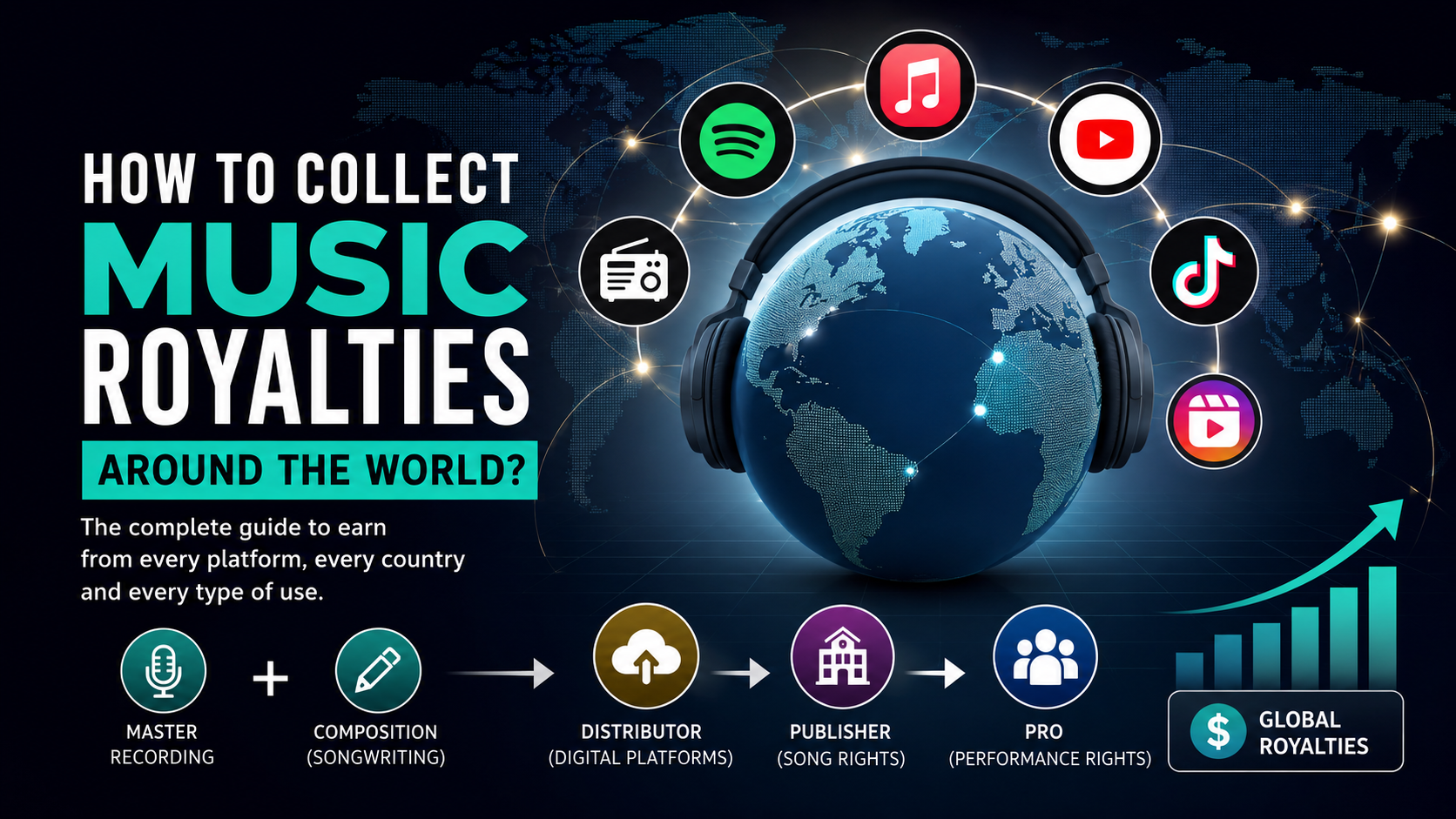
- Who receives the money from Spotify
- Difference between master royalties and publishing royalties
- Factors that affect payment per stream
- Advantages and disadvantages of the model
- Estimated income comparison table
- Common mistakes
- Real-world cases
- Frequently asked questions
- Conclusion
How Much Does Spotify Pay Per Stream?
As a general reference, many industry analyses place Spotify’s average payout between USD 0.003 and USD 0.005 per stream. However, that range should not be understood as an official or guaranteed rate.
In practice, a song may generate more or less depending on factors such as:
- The country where the stream occurs.
- The listener’s account type.
- Advertising or subscription revenue.
- The catalog’s share of total streams.
- Agreements between Spotify and rights holders.
- Distributor or label commission.
- Splits between artists, producers, songwriters, and publishers.
Spotify explains that calculating a “per-stream rate” means dividing total payments by total streams, but warns that this figure does not represent a fixed price for each stream. :contentReference[oaicite:1]{index=1}
Is There a Fixed Rate Per Stream on Spotify?
No. Spotify does not pay a fixed amount for every stream.
This means it does not work like this:
| Incorrect idea | Reality |
|---|---|
| 1 stream is always worth USD 0.004 | The value changes depending on market, revenue, and rights |
| 1 million streams always pays the same | It can vary significantly between artists and countries |
| Spotify pays the artist directly | It usually pays rights holders, distributors, labels, and publishers |
| All streams have the same value | A Premium stream usually generates more than an ad-supported free stream |
The biggest mistake is thinking of Spotify as a cash register per play. In reality, it works more like a revenue pool: money comes in first, then it is distributed according to participation.
How Spotify’s Payment Model Works
The general process can be summarized as follows:
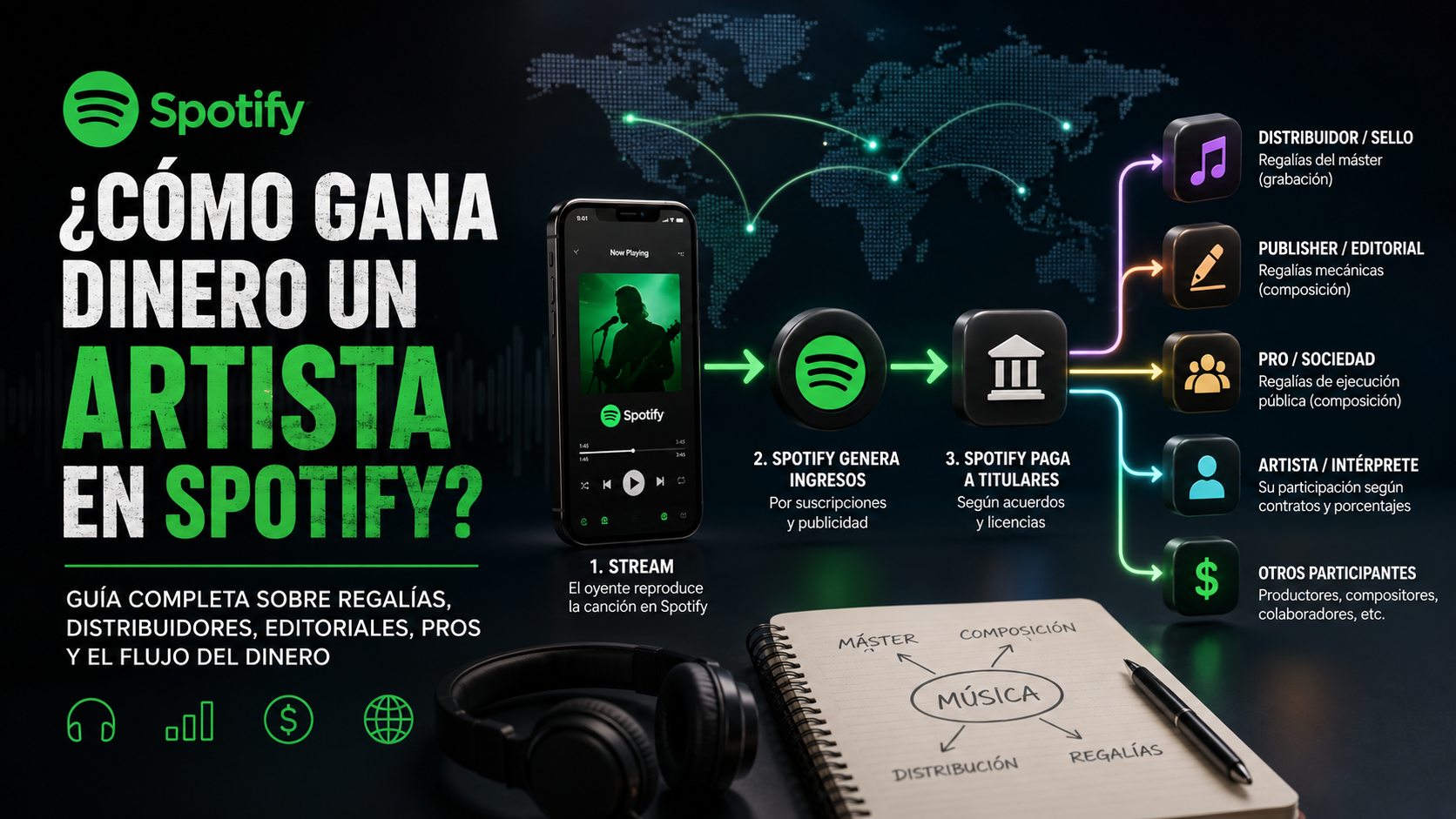
- Spotify generates revenue from subscriptions and advertising.
- A portion of that revenue is allocated to music rights payments.
- The money is distributed among rights holders.
- Each rights holder receives a share based on the performance of their catalog.
- The distributor, label, or publisher distributes the money according to contracts and splits.
- The artist receives their final share after commissions, advances, or recoupment if applicable.
Spotify has stated that it pays a major portion of music revenue to rights holders, such as labels, distributors, and publishers. In 2025, Spotify reported USD 11 billion in payments to the music industry. :contentReference[oaicite:2]{index=2}
What Streamshare Means
Streamshare is the participation a song, artist, label, or catalog has within the total eligible streams in a specific market and period.
Simple example:
If 1,000,000,000 streams are generated in a market during one month and your catalog gets 1,000,000 streams, your participation would be:
| Concept | Value |
|---|---|
| Total market streams | 1,000,000,000 |
| Streams from your catalog | 1,000,000 |
| Approximate participation | 0.1% |
That participation is used to calculate what share of the royalty pool belongs to the rights holders of that catalog.
Practical Calculation Example
Let’s assume a simplified scenario:
| Concept | Hypothetical value |
|---|---|
| Available music revenue in a market | USD 1,000,000 |
| Your catalog participation | 0.1% |
| Gross royalties generated | USD 1,000 |
| Distributor commission, example 15% | USD 150 |
| Net before internal splits | USD 850 |
In this example, the artist or label does not receive money simply for “having streams,” but for their participation within the total distributable revenue.
Who Receives the Money from Spotify?
Spotify usually does not pay every independent artist directly. The money typically goes through intermediaries or rights holders.
| Actor | Function |
|---|---|
| Spotify | Platform that generates revenue from subscriptions and advertising |
| Music distributor | Delivers the music and collects master royalties |
| Record label | May control or administer the master recording |
| Main artist | Performs and commercially exploits the recording |
| Songwriter | Author of the lyrics or music |
| Publisher | Administers publishing rights |
| PRO or collecting society | Collects certain public performance royalties depending on territory |
Difference Between Master Royalties and Publishing Royalties
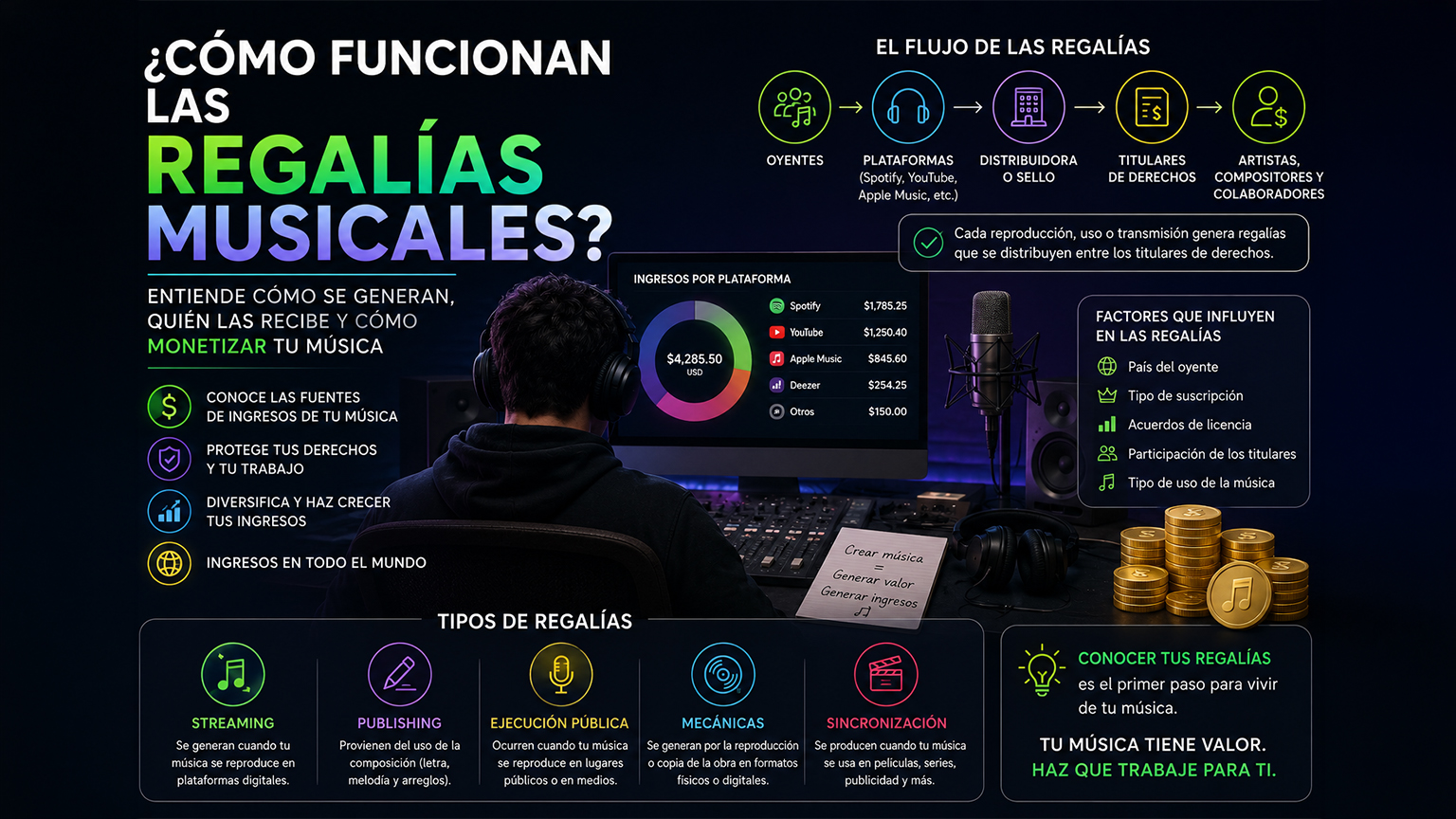
A Spotify stream can generate different types of income.
Master Royalties
These correspond to the sound recording. They are usually received by:
- Independent artist.
- Record label.
- Distributor.
- Owner of the phonogram.
Example: if a song was recorded by an artist and distributed through an aggregator, master royalties usually arrive first through the distributor.
Publishing Royalties
These correspond to the composition: lyrics and music.
They may involve:
- Songwriters.
- Publishers.
- Collective management organizations.
- Publishing administrators.
An artist may own the master but not necessarily control 100% of the composition.
Factors That Affect How Much Spotify Pays Per Stream
1. Listener’s Country
Not all markets generate the same revenue. A stream in a country with higher subscription prices may generate more than a stream in a market with a lower average price.
2. User Type
Streams from Premium users usually generate more value than streams from free users funded by advertising.
3. Advertising Revenue
In the free model, the value depends on available advertising revenue in that market.
4. Catalog Participation
Payment depends on how much participation your music has within the total eligible streams.
5. Contract With Label or Distributor
An independent artist with direct distribution may receive a different percentage than an artist signed to a label.
6. Commissions
A distributor may charge:
- Percentage commission.
- Annual fee.
- Release fee.
- Additional commission for publishing or administrative services.
7. Splits Between Collaborators
If a song has several artists, producers, or songwriters, income must be divided according to internal agreements.
Advantages and Disadvantages of Spotify’s Model
| Advantages | Disadvantages |
|---|---|
| Allows music to be monetized globally | Payment per stream can be low |
| Scales with international audiences | There is no fixed rate that is easy to predict |
| Helps artists get discovered | Income depends on volume and retention |
| Provides useful audience data | Reports and payments may have delays |
| Can complement concerts, merch, and publishing | Many artists confuse streams with net profit |
Estimated Income by Number of Streams
The following table uses approximate ranges. It does not represent a payment promise.
| Streams | Low estimate USD 0.003 | High estimate USD 0.005 |
|---|---|---|
| 1,000 | USD 3 | USD 5 |
| 10,000 | USD 30 | USD 50 |
| 100,000 | USD 300 | USD 500 |
| 500,000 | USD 1,500 | USD 2,500 |
| 1,000,000 | USD 3,000 | USD 5,000 |
| 10,000,000 | USD 30,000 | USD 50,000 |
These values are approximate gross amounts before commissions, taxes, recoupment, internal splits, and differences between master royalties and publishing royalties.
Example: 1 Million Streams on Spotify
One million streams could generate approximately between USD 3,000 and USD 5,000 gross, using average industry ranges.
But the final income can change as follows:
| Scenario | Possible result |
|---|---|
| Independent artist, distributor with 0% commission | Higher net income |
| Distributor with 15% commission | Lower net income |
| Label with a 50/50 contract | The artist receives a smaller share |
| Song with several collaborators | Income is divided according to splits |
| Pending advance recoupment | There may be no immediate payment |
Real-World Cases
Case 1: Independent Artist
An artist distributes music through a platform that charges an annual fee and does not retain commission. If the song generates master royalties, the artist can receive a high share of net income, as long as they own the recording.
Case 2: Artist Signed to a Label
A signed artist may generate many streams, but the money goes first to the label. The final payment depends on the contract, advances, recoupable expenses, and agreed percentage.
Case 3: Song With Several Songwriters
Even if the artist receives master royalties, publishing royalties must be divided between songwriters and publishers. If the publishing registration is not done correctly, part of the money may remain unclaimed.
Case 4: Independent Label Catalog
A label with multiple artists can build meaningful income through volume. In this case, the key is not only one viral song, but organized catalog administration, metadata, contracts, and reporting.
Common Mistakes
Thinking Spotify Pays the Artist Directly
In most cases, Spotify pays distributors, labels, aggregators, and publishers. Those parties then pay the artist according to the relevant agreement.
Believing All Streams Are Worth the Same
The value changes depending on country, user type, market revenue, and rights agreements.
Ignoring Publishing Royalties
Many artists only check distributor income and forget to register works, songwriters, and publishing information.
Confusing Gross Income With Net Income
A song may generate USD 1,000 gross, but the artist may receive less after commissions, splits, taxes, or recoupment.
Not Reviewing Metadata
Errors in ISRC, UPC, artist names, songwriters, or rights holders can delay payments or cause incorrect assignments.
Not Having Internal Agreements
If a song has several contributors, percentages should be clear before the release.
Buying Fake Streams
Artificial streams can lead to penalties, music removal, royalty withholding, or account blocking.
Options to Increase Spotify Income
1. Improve Listener Retention
Getting streams is not enough. It also matters whether people save songs, listen again, and follow the artist.
2. Work Releases Strategically
A release should have a calendar, artwork, pitching, short-form content, pre-save, smart link, and metric tracking.
3. Take Care of Metadata
Correct data helps royalties reach the correct rights holder.
4. Register Works and Songwriters
Publishing can represent an important part of total income.
5. Diversify Platforms
Spotify is important, but it should not be the only source. Apple Music, YouTube Music, TikTok, Deezer, Amazon Music, and other platforms also create value.
6. Combine Streaming With Other Income Sources
Streaming can support:
- Concerts.
- Merchandising.
- Sync licensing.
- Licenses.
- Fan clubs.
- YouTube.
- Publishing.
- Brand campaigns.
Spotify vs Other Music Income Sources
| Source | How it generates money | Comment |
|---|---|---|
| Spotify | Music streaming | Scales with volume and audience |
| YouTube Music | Streaming and Art Tracks | Can be combined with Content ID |
| YouTube Content ID | Use of music in videos | Requires control of rights |
| Publishing | Composition | Requires correct registration |
| Sync licensing | Use in film, TV, advertising, or video games | Can generate high income |
| Concerts | Live performances | Depends on demand and market |
| Merchandising | Direct sales to fans | Higher margin when there is community |
Frequently Asked Questions
1. How much does Spotify pay for 1,000 streams?
As a general reference, 1,000 streams may generate between USD 3 and USD 5 gross, although the real value may vary.
2. How much does Spotify pay for 1 million streams?
One million streams may generate approximately between USD 3,000 and USD 5,000 gross, before commissions, taxes, and splits.
3. Does Spotify pay the same in every country?
No. The value changes depending on the market, user type, and available revenue in each territory.
4. Does Spotify pay artists directly?
Usually not. Spotify typically pays rights holders, distributors, labels, and publishers, who then pay the artist.
5. Is a Premium stream worth more than a free stream?
Generally yes, because Premium accounts generate subscription revenue, while free accounts depend on advertising.
6. Does Spotify have an official per-stream rate?
No. Spotify states that it does not pay royalties using a fixed per-stream rate.
7. What is streamshare?
It is the participation a song or catalog has within the total eligible streams in a market and period.
8. Do Spotify royalties include publishing?
Spotify can generate master royalties and publishing royalties, but they do not always arrive through the same channel.
9. Why does my distributor pay less than expected?
It may be due to commission, country of stream, user type, adjustments, taxes, splits, pending reports, or withholdings.
10. Does buying streams help earn more?
No. Buying fake streams can lead to penalties, music removal, and loss of royalties.
11. When does Spotify pay royalties?
Spotify reports and pays rights holders according to internal cycles. Then the distributor or label pays the artist according to its own timelines.
12. What does an artist need to get paid correctly?
They need reliable distribution, correct metadata, ISRC, UPC, clear splits, defined ownership, and publishing registrations when applicable.
Reference Sources
- Spotify for Artists: royalty guide and explanation of the streamshare model. :contentReference[oaicite:3]{index=3}
- Spotify Loud & Clear: transparency information about payments to the music industry. :contentReference[oaicite:4]{index=4}
- Spotify Newsroom: reported payments to the music industry in 2025. :contentReference[oaicite:5]{index=5}
- Ditto Music: indicative payment-per-stream ranges used as industry reference. :contentReference[oaicite:6]{index=6}
Conclusion
Spotify does not pay a fixed rate per stream. Income depends on a revenue-sharing system based on market revenue, territory, user type, catalog participation, and agreements between rights holders.
For an artist or label, the right question is not only “how much does Spotify pay per stream,” but also:
- Who controls the master?
- Who administers the publishing?
- What commission does the distributor charge?
- Is the metadata correct?
- Are the splits signed?
- Does the release strategy help build a real audience?
For distribution platforms such as UXEM Entertainment Group, the value is not only in delivering music to Spotify, but also in helping organize the catalog, protect metadata quality, manage royalties, and connect distribution with tools such as Smart Links, Pre-Save, YouTube Content ID, and publishing.
Streaming music can generate sustainable income, but it needs structure. Without clear rights, correct data, and strategy, streams are just numbers floating in the fog.