Introduction
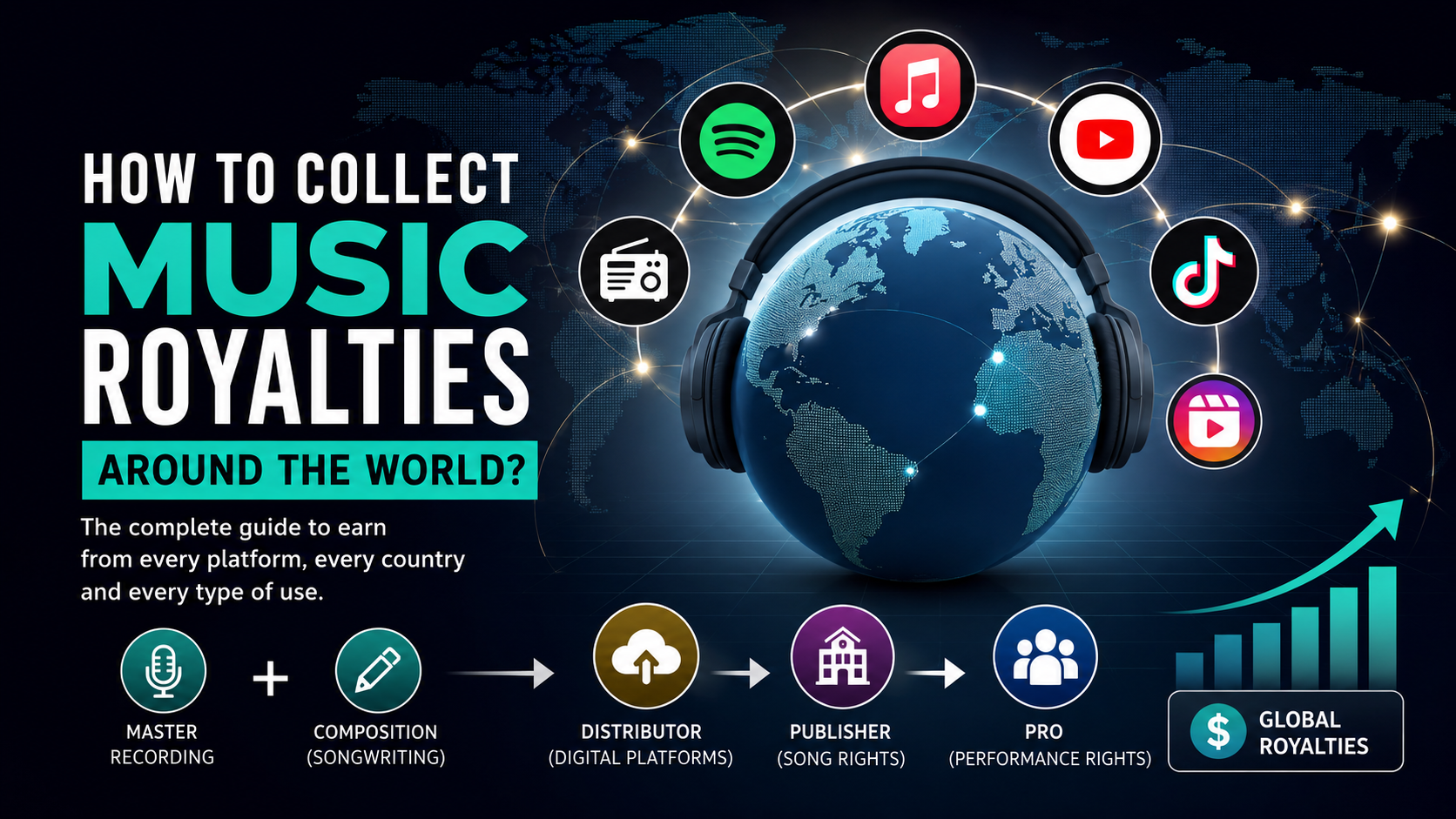
One of the most common questions among independent artists and record labels is how music royalties actually work.
Questions such as:
- How much does Spotify pay per stream?
- Who gets paid when a song is played?
- What's the difference between recording royalties and publishing royalties?
- How are international royalties collected?
have become increasingly important in an industry where music is primarily consumed through streaming services and digital platforms.
In this guide, you'll learn what music royalties are, the different types of royalties, how they are calculated, and who participates in the distribution of music revenue.
Table of Contents
- What Are Music Royalties?
- How Does Money Flow in the Music Industry?
- Types of Music Royalties.
- Streaming Royalties.
- Publishing Royalties.
- Public Performance Royalties.
- Mechanical Royalties.
- Practical Example.
- Advantages and Challenges.
- Frequently Asked Questions.
- Summary.
What Are Music Royalties?
Music royalties are payments received by rights holders when a musical work is commercially used.
Quick Definition
Music royalties are payments generated by the use of a song through streaming, sales, public performances, synchronization, or other commercial exploitation.
Depending on the type of use, different parties may receive a share of these revenues:
- Performing artists.
- Songwriters.
- Producers.
- Record labels.
- Music publishers.
- Copyright holders.
How Does Money Flow in the Music Industry?
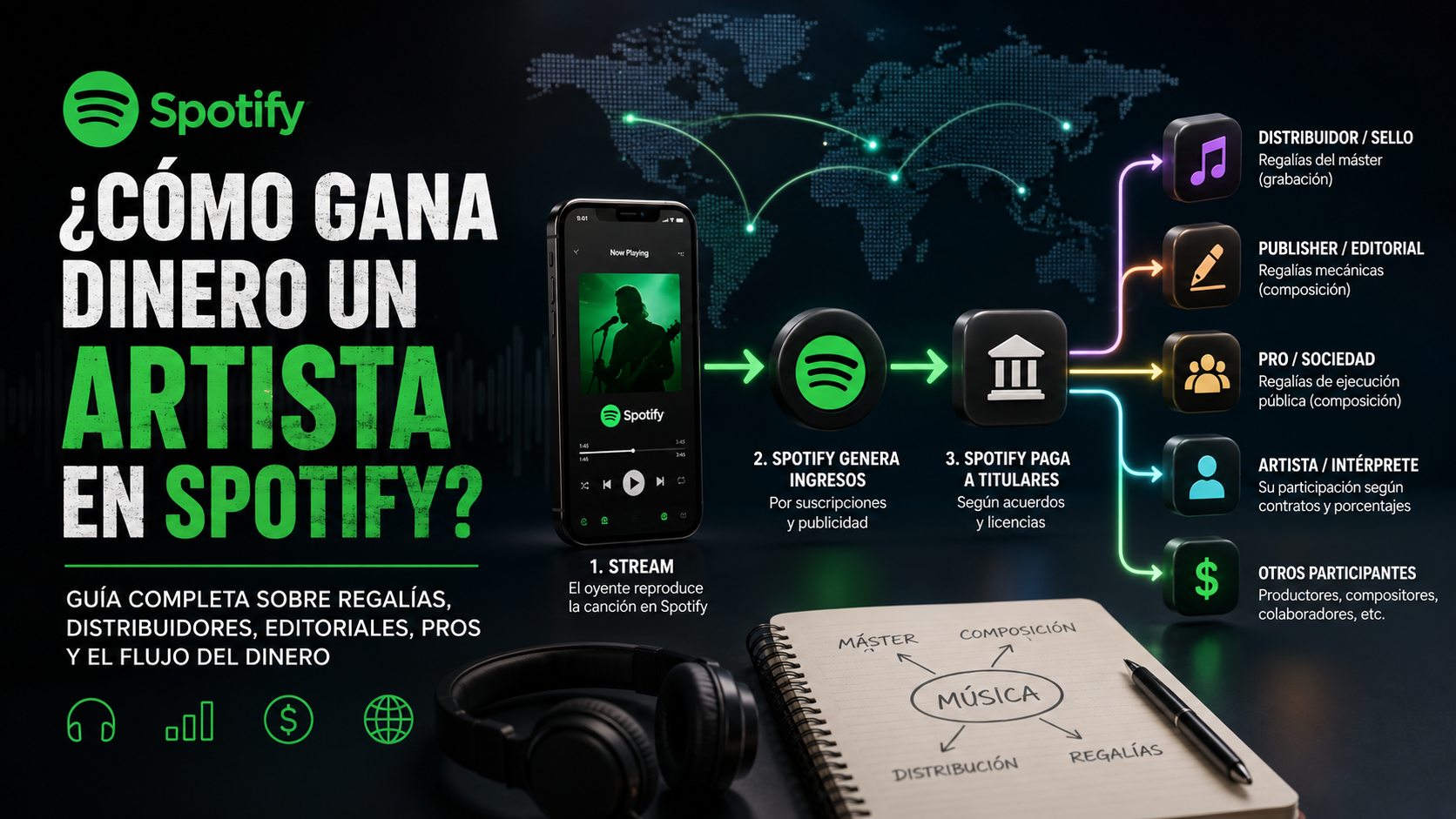
When someone listens to a song on a digital platform, the money passes through several participants before reaching the artist.
Simplified Flow
Listener
   ↓
Spotify / YouTube Music / Apple Music
   ↓
Distributor or Record Label
   ↓
Rights Holder
   ↓
Artists, Songwriters and Contributors
Each participant receives a portion according to:
- Contracts.
- Registered rights.
- Type of royalty.
- Country.
- Platform used.
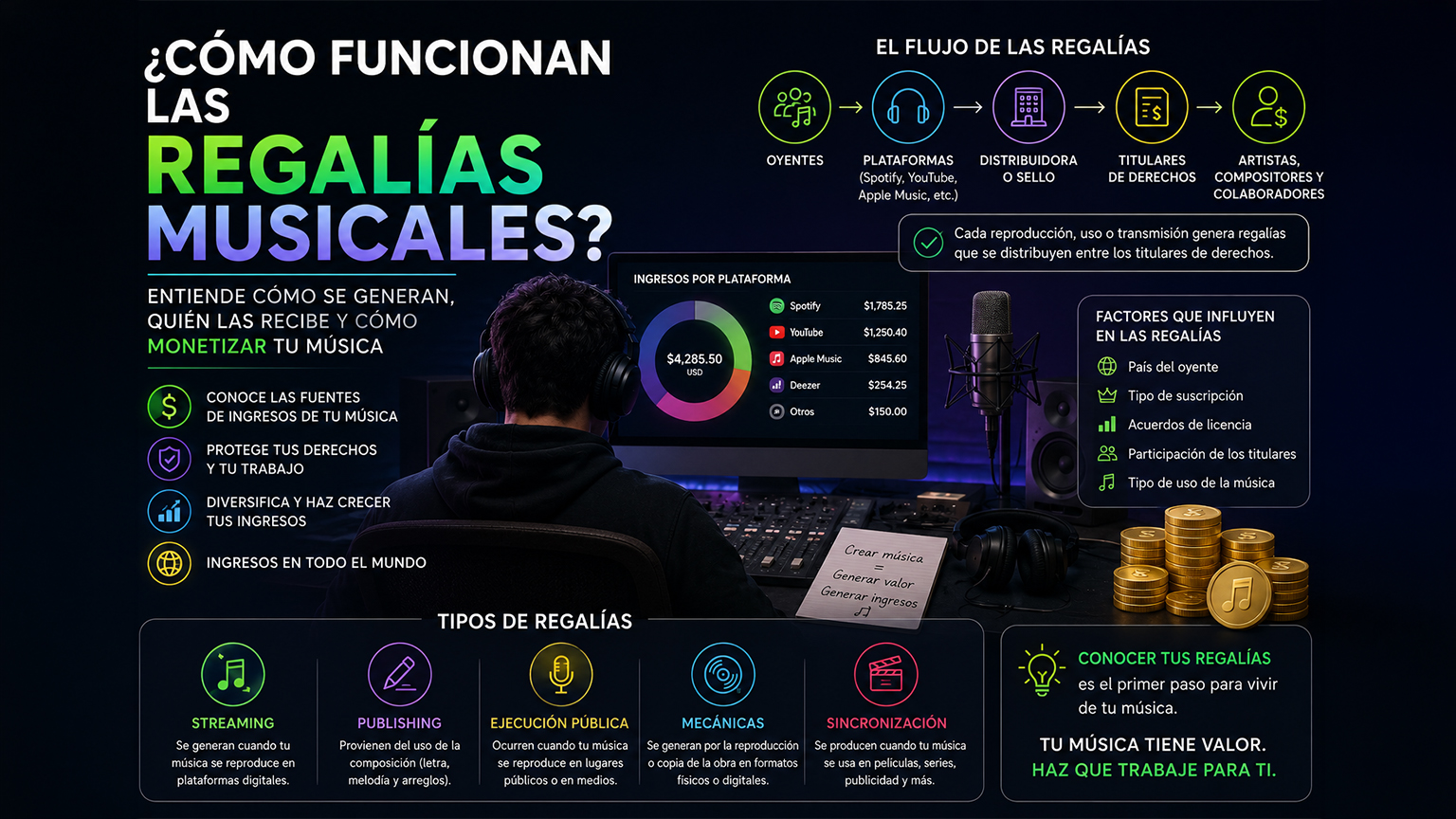
Types of Music Royalties
There are several types of royalties, and each corresponds to a different way music is exploited commercially.
| Royalty Type | Generated When | Main Beneficiaries |
|---|---|---|
| Streaming Royalties | A song is played on a streaming platform | Artists and labels |
| Publishing Royalties | The composition is used | Songwriters and publishers |
| Public Performance Royalties | Music is played publicly | Songwriters and composers |
| Mechanical Royalties | A work is reproduced or copied | Songwriters and rights holders |
| Sync Royalties | Music is used in audiovisual content | Rights holders and authors |
Streaming Royalties
These are probably the most well-known royalties today.
They are generated when a song is played on platforms such as:
- Spotify
- Apple Music
- YouTube Music
- Deezer
- Amazon Music
- Tidal
Does Spotify Pay a Fixed Amount Per Stream?
No.
Streaming platforms do not pay a fixed rate for each play.
The amount depends on factors such as:
- Listener's country.
- Subscription type.
- Total number of streams.
- Licensing agreements.
- Rights ownership structure.
For this reason:
There is no universal amount that Spotify pays for every stream.
Who Receives Streaming Royalties?
Streaming revenue can be divided among several participants.
Example
Suppose a song generates revenue on Spotify.
Depending on the agreement, royalties may be distributed among:
| Participant | Role |
|---|---|
| Main Artist | Performance |
| Record Label | Investment and distribution |
| Producer | Music production |
| Songwriter | Author of the composition |
| Publisher | Rights administration |
The percentages depend on contractual agreements.
Publishing Royalties
Publishing royalties are linked to the musical composition itself.
This includes:
- Lyrics.
- Melody.
- Protected arrangements.
- Registered musical works.
Who Receives Publishing Royalties?
Typically:
- Songwriters.
- Composers.
- Music publishers.
These royalties exist even if the songwriter does not perform the song.
Public Performance Royalties
These royalties are generated when music is played publicly.
Examples include:
- Radio.
- Television.
- Concerts.
- Bars.
- Restaurants.
- Shopping malls.
Collective management organizations often collect and distribute these royalties.
Mechanical Royalties
Mechanical royalties are generated when a musical work is reproduced or copied.
Historically, they were associated with:
- Vinyl records.
- CDs.
- Cassette tapes.
Today they can also be generated through:
- Digital downloads.
- Certain streaming services.
- Permanent reproductions.
Sync Royalties
Also known as Synchronization Royalties.
They are generated when music is used in:
- Films.
- TV series.
- Advertising campaigns.
- Video games.
- Documentaries.
- Other audiovisual productions.
Example
A brand uses a song in an international advertising campaign.
The rights holder may negotiate:
- A one-time payment.
- Recurring royalties.
- Geographic restrictions.
- Duration of use.
Summary
Music royalties are the economic foundation of the modern music industry.
They represent the revenue generated when a song is streamed, distributed, publicly performed, synchronized, or otherwise commercially exploited.
Understanding how royalties work allows artists and record labels to:
- Protect their rights.
- Diversify revenue streams.
- Make better business decisions.
- Build sustainable careers.
In an increasingly digital and global ecosystem, understanding music royalties is an essential skill for every music professional.
Continue Learning
Royalties are just one part of today's music ecosystem.
Topics such as digital distribution, ISRC codes, YouTube Content ID, publishing, and international monetization are closely connected and help artists and record labels understand how to manage and grow their catalogs in the digital economy.